| SEO field |
Value |
| Title tag |
BWP vs BWR Plywood: Side-by-Side Comparison for Indian Homes | Archidply |
| Meta description |
BWP vs BWR plywood compared on standard, resin, water resistance, cost and use — with a room-by-room guide to the right grade for every part of an Indian home. |
| URL slug |
/blog/bwp-vs-bwr-plywood/ |
| Primary keyword |
BWP vs BWR plywood |
| Secondary keywords |
BWP plywood, BWR plywood, difference between BWP and BWR plywood, BWP plywood for kitchen, boiling water proof plywood |
| Blog category |
Plywood |
| Length |
~2,400 words, about 10 minutes |
| Featured image idea |
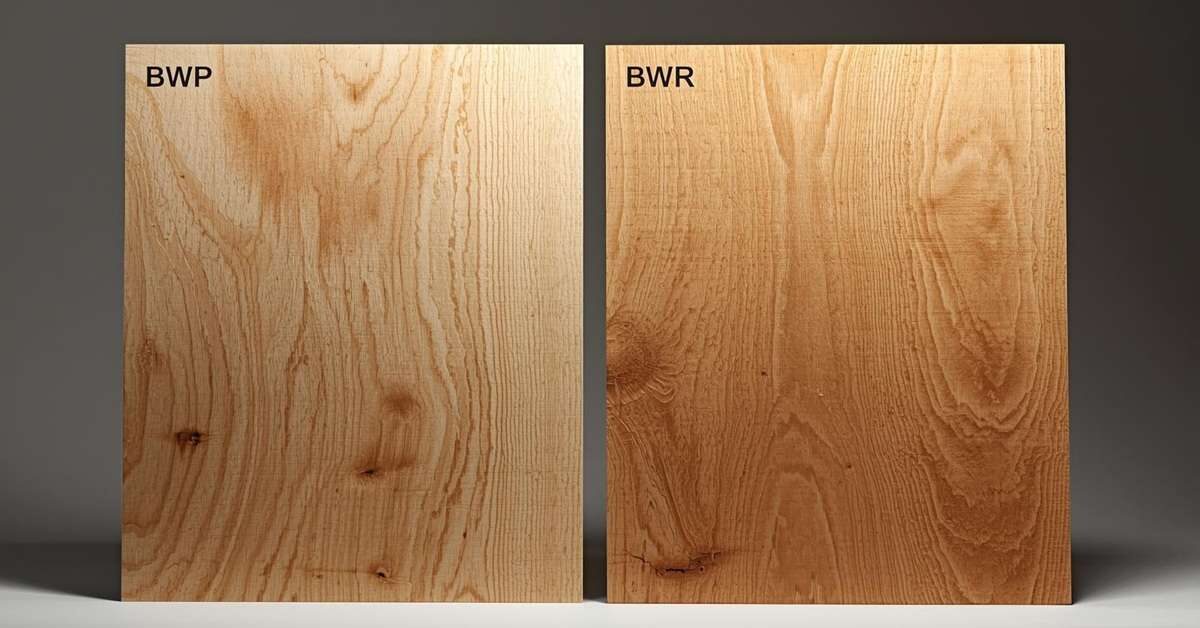
Two sheets side by side with their edges visible, one labelled BWR and one BWP, in a kitchen under construction |
BWP and BWR are only one letter apart, and in many plywood shops the two names are used as if they meant the same thing. They don’t. They are made to different standards, bonded and tested differently, and suited to different parts of a home.
The short answer:
BWP (Boiling Water Proof) plywood is built for repeated, direct contact with water. BWR (Boiling Water Resistant) plywood is built for humidity and the occasional splash. If a surface will get wet often, choose BWP. If it will mostly be damp but rarely wet, BWR does the job well.
What Is BWP Plywood?
BWP stands for Boiling Water Proof. In Archidply’s range, BWP plywood is made to IS 710, the Indian Standard for marine plywood, which is why the two names are often used together.
It is bonded with phenol-formaldehyde (PF) resin, which holds its bond even when the sheet is soaked. IS 710 requires the sheet to survive 72 hours of continuous immersion in boiling water without the layers separating. BWP sheets are also chemically treated against fungus, termites and borers.
That makes BWP the grade for anywhere water is a regular visitor: under the sink, around the hob, inside a bathroom vanity, or on a wall that faces the monsoon.
What Is BWR Plywood?
BWR stands for Boiling Water Resistant. It is a general-purpose grade under IS 303 and is also bonded with phenol-formaldehyde resin, which is why it handles moisture far better than MR (commercial) plywood.
BWR passes a boiling-water test as well, but a less demanding one than IS 710 sets for BWP. In practice, BWR is resistant, not proof. It copes very well with steam, humidity and the occasional spill. It is not designed to sit in standing water or take a daily soaking.
That makes BWR a sensible, cost-effective grade for kitchen cabinets away from the sink, utility storage, and furniture in humid coastal cities.
Why the Resin Makes the Difference
The single biggest reason plywood survives water, or doesn’t, is the resin that holds its layers together.
- Urea-formaldehyde (UF) is used in most MR, or commercial, plywood (Archidply’s MR grade uses melamine formaldehyde). It bonds well in dry conditions, but the bond weakens when it stays wet.
- Phenol-formaldehyde (PF) is used in BWR and BWP plywood. Once cured under heat and pressure, it forms a bond that does not soften in water. It is also why waterproof grades often show a darker glue line at the edge.
BWR and BWP both use PF resin. What separates them is how much water the finished sheet is built and tested to withstand, along with the timber, the treatment and the standard each is made to.
How the Boiling-Water Test Works
The names Boiling Water Resistant and Boiling Water Proof come from the way these grades are tested. Samples are cut from finished sheets and kept in boiling water for a set period. They are then checked to see whether the layers have started to separate and how much strength the glue line has kept.
Boiling water is far harsher than anything a kitchen or bathroom will throw at the sheet in daily use. That is the point. A sheet that holds together after hours in boiling water will hold together for years under a dripping tap.
IS 710 requires BWP-grade marine plywood to survive 72 hours of continuous boiling without the layers separating. BWR plywood passes a boiling-water test under IS 303 that is less demanding, which is why it is called resistant rather than proof.
BWP vs BWR Plywood: Side-by-Side
| Basis |
BWR plywood |
BWP plywood |
| Full form |
Boiling Water Resistant |
Boiling Water Proof |
| Indian Standard |
IS 303 (general purpose) |
IS 710 (marine) in Archidply’s range |
| Resin |
Phenol-formaldehyde |
Phenol-formaldehyde |
| Boiling-water test |
Passes a shorter, less demanding test |
72 hours of continuous boiling without delamination |
| Water exposure it is built for |
Humidity, steam, occasional splashes |
Repeated or direct contact with water |
| Treatment |
Treated against wood-destroying organisms |
Treated against fungus, termites and borers |
| Relative cost |
Lower |
Higher |
| Best for |
Kitchen cabinets away from the sink, utility and laundry storage, wardrobes in humid cities |
Sink units, bathroom vanities, areas around the hob, exterior-facing work, balconies |
| Archidply option |
BWR Plywood Classic |
Gold Marine, Platinum Prime |
Why BWP Costs More, and When It’s Worth It
BWP plywood costs more than BWR for good reasons. It is usually made from denser hardwood, uses a resin system and press cycle built for continuous water contact, is treated more thoroughly against fungus and insects, and is tested to a stricter standard.
The good news is that you rarely need BWP everywhere. In a typical modular kitchen, the sink unit and the cabinets beside the hob are a small share of the total sheets used. Specifying BWP there and BWR for the rest gives you protection where it matters and keeps the overall budget in check.
The calculation changes once you count the cost of failure. Replacing a swollen sink cabinet means removing the countertop, the sink and the plumbing, then paying for labour, new hardware and a new laminate that may no longer match. That bill is many times the difference in sheet price.
Which Grade for Which Part of Your Home?
The right grade depends on how much water each zone will actually see, not on which room it is in. A kitchen alone can need two grades.
| Zone |
Water exposure |
Recommended grade |
| Kitchen sink unit |
Daily splashes, possible leaks |
BWP |
| Kitchen base cabinets near the hob |
Steam, spills, heat |
BWP |
| Kitchen base cabinets away from the sink |
Humidity, occasional spills |
BWR |
| Kitchen wall cabinets and tall units |
Steam and humidity |
BWR |
| Bathroom vanity |
Direct, daily water contact |
BWP |
| Utility and laundry area |
Humidity, occasional water |
BWR (BWP near the washing machine outlet) |
| Balcony and exterior-facing furniture |
Rain, monsoon moisture |
BWP |
| Wardrobes in coastal cities |
Year-round humidity |
BWR |
| Wardrobes and beds in dry rooms |
Normal indoor humidity |
MR (commercial) is enough |
This is where the cost difference pays off. Using BWP everywhere is not wrong, but it is rarely necessary. Using BWR in the sink unit is a saving that usually comes back as a swollen carcass a few monsoons later.
Climate Matters: Coastal, Humid and Dry Cities
The same room can need a different grade depending on where in India the home is.
- Coastal cities such as Mumbai, Chennai, Kochi, Kolkata and Visakhapatnam have high humidity most of the year. Wardrobes and dry storage benefit from BWR, while kitchens and bathrooms should use BWP.
- Monsoon-heavy regions such as Kerala, coastal Karnataka and the North-East see long wet seasons. Treat exterior-facing walls and ground-floor rooms as wet zones.
- Hill stations combine damp, cold and condensation. BWR is a sensible default for most furniture, with BWP for anything near water.
- Drier inland cities across much of North and Central India allow MR plywood in bedrooms and living rooms, with BWR and BWP reserved for the kitchen and bathroom.
- Ground-floor homes anywhere face more rising damp than upper floors. Move one grade up for base units and anything that touches the floor or an external wall.
How to Tell BWP and BWR Apart at the Counter
Once the sheets are cut and laminated, BWP and BWR look much the same. Check these before they are.
- The stamp. Look for the ISI mark, the Indian Standard number (IS 710 or IS 303) and the grade printed on the sheet.
- The licence number. A genuine BIS-certified sheet carries a licence number that can be checked against the manufacturer’s certificate.
- The invoice. Ask for the grade and standard to be written on the bill, not just “waterproof ply”.
- The warranty. BWP sheets usually carry longer warranties. Ask for it in writing.
Three Common Mistakes
- Treating “waterproof” as a grade. It is a sales word. Ask for BWP or BWR and the standard behind it.
- One grade for the whole kitchen. Splitting BWP for the wet run and BWR for the rest is often the best balance of cost and life.
- Forgetting the edges. Even BWP has one weak point: a raw cut edge. Seal every edge with edge banding, especially near the sink.
Installation Tips for Kitchens and Bathrooms
Even the right grade needs to be installed well. These habits add years to any wet-zone cabinet.
- Edge band every cut edge, including the edges hidden inside the cabinet and around the sink cut-out.
- Laminate both faces. Use a decorative laminate outside and a balancing laminate inside, so the sheet stays flat and sealed.
- Seal the sink and hob cut-outs with a waterproof sealant before fitting.
- Raise base units on legs or a plinth, so floor-cleaning water never sits against the carcass.
- Use stainless steel or corrosion-resistant hardware in wet zones. Rusting hinges and channels are often the first thing to fail.
- Check plumbing before closing the cabinet. A slow drip from a joint is the most common cause of sink-unit damage.
- Keep the cabinet ventilated. A small gap at the back of the sink unit helps moisture escape.
BWP and BWR Plywood From Archidply
Archidply has been building plywood for Indian homes since 1976, with BIS licences for both standards.
- Gold Marine is BWP grade, made to IS 710 from 100% hardwood timber with phenol-formaldehyde resin. It is calibrated, borer and termite free, rated E-0 for formaldehyde emission and backed by a 30-year warranty.
- Platinum Prime is a marine-grade IS 710 sheet with a thicker face veneer, E-0 emission rating and a lifetime warranty, for projects where nothing less will do.
- BWR Plywood Classic is made to IS 303 with phenol-formaldehyde resin and 100% hardwood timber, chemically treated against wood-destroying organisms, and carries a 7-year warranty. It is available in 19 and 25 mm, in sheet sizes from 6 × 3 ft to 8 × 4 ft.
For block boards,
BWP Gold Block Board brings the same grade to long spans like wardrobe shutters and shelves. See our complete
plywood range or read more on
matching plywood grades to wet zones.
Frequently Asked Questions
What is the difference between BWP and BWR plywood? BWP (Boiling Water Proof) plywood is built for repeated direct water contact and, in Archidply’s range, is made to the IS 710 marine standard. BWR (Boiling Water Resistant) plywood is made to IS 303 and is built for humidity and occasional splashes, not standing water.
Which is better for a kitchen, BWP or BWR? Both have a place. Use BWP for the sink unit and around the hob, where water and heat are constant. BWR works well for cabinets away from the sink and for wall units.
Is BWP plywood the same as marine plywood? The two terms are often used together. Archidply’s BWP plywood is made to IS 710, the Indian Standard for marine plywood.
Is BWR plywood waterproof? No. BWR is water resistant. It handles humidity and the occasional spill very well but is not designed for continuous contact with water.
Is BWP plywood worth the extra cost? In wet zones, yes. Replacing a failed sink cabinet costs far more than the difference in sheet price. In dry or lightly humid areas, BWR or MR plywood is the smarter spend.
Can BWR plywood be used in a bathroom? Only for parts that stay dry, such as a mirror cabinet away from the shower. The vanity itself, and anything that gets splashed every day, should be BWP.
Can BWP plywood be used outdoors? BWP handles moisture well, but no plywood should be left bare to sun and rain. For exterior use, choose BWP, seal every edge and protect the faces with an exterior-grade finish or laminate.
How long does BWP plywood last? Properly installed and finished, BWP plywood is built for decades of service. Archidply’s Gold Marine carries a 30-year warranty, and Platinum Prime carries a lifetime warranty.
Do BWP and BWR plywood look different? Not much from the face. The edge may show a darker glue line, but the reliable way to tell them apart is the stamp: the grade, the Indian Standard and the BIS licence number.
BWP and BWR are not good and better. They are two tools for two jobs. Match the grade to the water each zone will see, seal every edge, and your kitchen and bathroom will look the way they did on day one for years to come.


 +91-9711070340
 info@archidply.com


 Download E-Brochure


