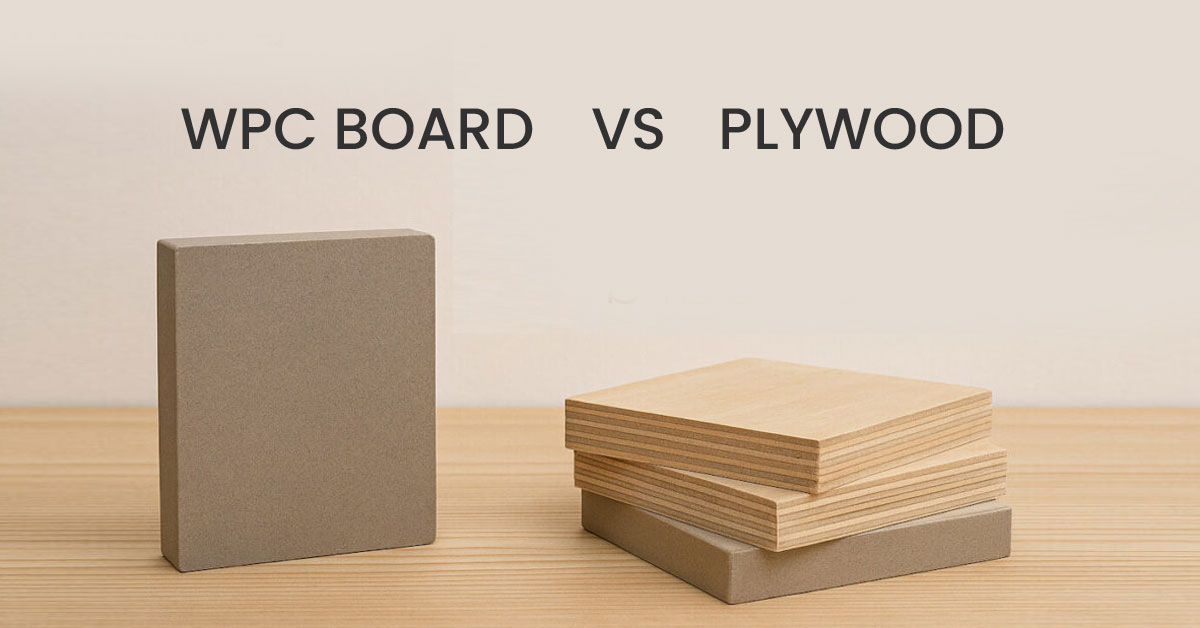
Kitchens and
bathrooms are where materials are truly tested. Water, steam, cleaning and
constant use all meet in a small space, and the furniture has to look good
through every bit of it. Two materials lead most conversations today: WPC board
and plywood.
Archidply has
made plywood since 1976 and now crafts WPC boards too, so this is a question we
can answer from both sides. Each material has a clear role, and the best spaces
use each where it shines.
Two Materials, Two Strengths
Plywood is made
by bonding thin layers of wood veneer with their grain running in alternate
directions. That cross-layered build gives it natural strength and stiffness,
which is why it has been the backbone of Indian furniture for generations. Its
water resistance depends on its grade, from MR for dry interiors to BWP and
marine grades for wet areas. Our guide to plywood grades
explains each one.
Archidply WPC Board
is a wood plastic composite, made by blending wood fibres with thermoplastic
resins. Because the fibres sit inside a plastic matrix, the board has very low
water absorption and is termite and borer proof by nature. It needs no sanding
or polishing, holds screws well and comes with a flat surface ready for
finishing.
In the Kitchen
The sink base
is the one place in a kitchen that sees water every single day. Here, WPC board
brings real peace of mind, because it resists swelling, rotting and warping
even when splashes and leaks happen. It also suits under-counter cabinets close
to the sink and dishwasher.
Plywood comes
into its own where strength across a span matters most, such as long shelves,
heavy-duty drawers and the base under a stone countertop. Choosing
boiling-water-proof or marine plywood for these parts keeps the whole kitchen
strong and moisture ready.
In the Bathroom
Bathrooms live
with humidity all day, and vanities often sit right beside the shower or basin.
WPC board is an excellent choice for vanity carcasses, wall cabinets and
storage units here. For tall, heavy vanity doors and premium finishes, Archidply Hybrid
WPC Board adds extra density and screw holding.
Where the
design calls for a warm veneer finish or a larger built-in unit outside the wet
zone, marine-grade plywood remains a trusted, elegant option.
Finish, Fixing and Care
Both materials
take laminates beautifully. WPC board arrives with a smooth, flat surface that
is ready for laminate, while plywood is equally at home with laminates and
natural veneers. For long shelves in WPC, closer supports help the board stay
straight under load. For plywood in wet areas, sealing every cut edge keeps the
core protected for longer.
In daily life,
WPC is almost maintenance free, needing only a wipe. Good-quality plywood with
a sound finish is just as easy to live with.
A Quick Way to Decide
Use this as a
starting point when planning your next kitchen or bathroom:
•
Sink base and under-counter cabinets: WPC Board
•
Bathroom vanities and wall cabinets: WPC or Hybrid WPC
Board
•
Long shelves, heavy drawers and countertop bases: BWP
or marine plywood
•
Veneered built-ins away from water: marine plywood
•
Tall, heavy shutters: Hybrid WPC Board or marine
plywood
The
right material in the right place is what makes a kitchen or bathroom last.
With plywood heritage since 1976 and a modern WPC range, Archidply gives you
both, crafted to the same exacting standard.
INTERNAL LINKS (LIVE PRODUCT PAGES)
•
Archidply WPC Board: https://www.archidply.com/products/wpc/wpc-board
•
Archidply Hybrid WPC Board: https://www.archidply.com/products/wpc/hybrid-wpc-board
•
Archidply WPC category: https://www.archidply.com/products/wpc
•
Blog: Plywood Grades Explained: https://www.archidply.com/blog/plywood-grades-explained
•
Blog: Marine Plywood vs Commercial Plywood: https://www.archidply.com/blog/marine-plywood-vs-commercial-plywood